




Description
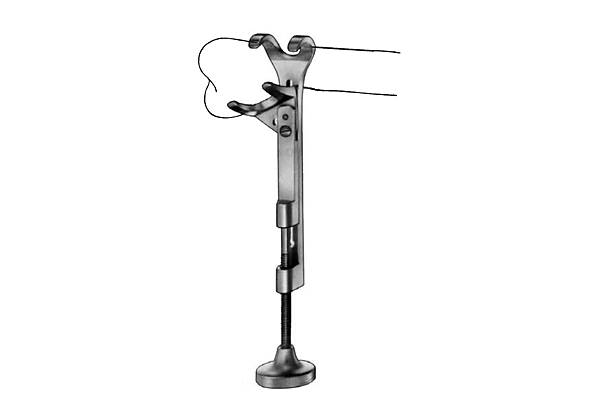
Lowman-Hoglund Bone Holding Clamps
The Lowman-Hoglund bone clamp grips long bones during reduction and plating. Three lengths suit different bone sizes.
A Lowman variant
It keeps the secure grip of the Lowman family. Meanwhile, the Hoglund changes adapt the jaws. Besides, the result is a dependable holding clamp.
Three lengths
Choose 18, 20 or 23 cm. Shorter clamps suit the forearm. Longer ones suit the tibia and femur.
Who uses the Lowman-Hoglund bone clamp
It appears on femur and tibia plating trays. Moreover, it keeps bone aligned during osteotomy. Furthermore, it suits revision work.
Clamping technique
Place the clamp across the reduced fracture. Then tighten gradually. Check alignment before drilling.
Keeping alignment
Once set, the clamp holds without an assistant. Consequently, drilling and screw placement become more accurate. Remove the clamp last.
Why surgeons choose it
Some surgeons prefer the jaw shape of the Hoglund version. Consequently, they reach for it on curved or tapered bone. Others keep it alongside the Lambert-Lowman.
Lowman-Hoglund bone clamp lengths
- 18 cm
- 20 cm
- 23 cm
- Supplied non-sterile
Lowman-Hoglund upkeep
Debris in the adjuster makes the clamp stiff. So flush it well, dry it and apply lubricant. Afterward, test the full range of travel.
The cover for your clamp
We protect each clamp for three years against manufacturing defects. Every clamp has a detailed once-over by Atlanta staff before dispatch. The FAQ section handles common order questions. Explore the rest of our orthopedic lineup for other sizes. We also confirm details for your team. Busy departments stock a second clamp to avoid delays. To learn about surgical stainless steel, check ASTM F899. For a sister pattern, add our Gerster-Lowman clamp.
Intended for professional buyers. Consult our shipping page for transit details. The reprocessing guide describes picture variation plus nickel in surgical steel.

Reviews
There are no reviews yet.