





Description
Endo Dissectors Periosteal Elevators
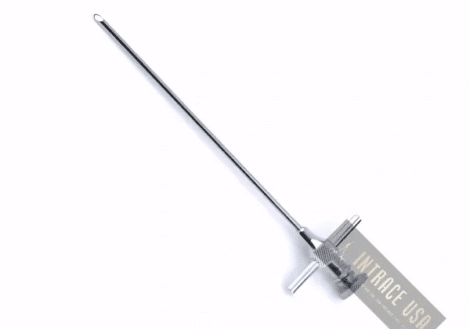
The endoscopic periosteal elevator lifts the periosteum from bone through a short incision. Its 12 mm blade raises a wide strip in each pass.
Wide blade, small port
Twelve millimetres covers a lot of bone. Yet the shaft stays slim enough for a small port. As a result, the surgeon releases tissue without extra incisions.
Handle options for the endoscopic periosteal elevator
We offer both an ergonomic handle and a standard handle. Besides, the shaft and blade do not change. Therefore, pick the grip that suits you.
Where it is used
It supports brow, midface and forehead lifts. Some teams also use it in craniofacial access. Typically it follows an initial port dissection.
Lifting with control
Keep the blade bevel facing the bone and push with small, even strokes. Then let the edge do the work instead of the wrist. Afterwards, check the endoscopic view to confirm the periosteum lifted as one layer.
Endoscopic periosteal elevator specifics
- 12 mm blade
- Ergonomic or standard handle
- Slim shaft for small ports
Cleaning steps
Rinse immediately after use, then brush the blade face. Dry it fully. Also, check the edge for burrs before storage.
Why we look after the elevator
We protect each elevator for three years against manufacturing defects as part of the price. Before it leaves us, a staff member in Atlanta looks over the elevator unhurriedly. The customer FAQ walks through the ordering steps. A backup elevator in the sterile store avoids delays. To learn about instrument steels, open ASTM F899. To complete the set, try the periosteal spreaders. Further tools appear in the general surgical category.
For hospital and clinic use. Pictures on this page are for reference, while stainless steel contains nickel; visit our reprocessing guide for more. Visit our shipping policy for dispatch times.


Reviews
There are no reviews yet.