




Description
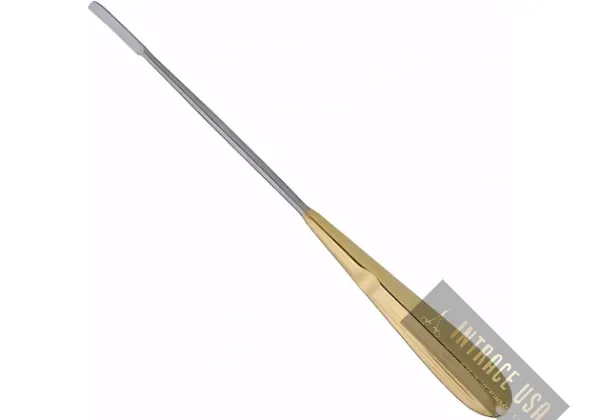
Endo Dissectors Flap
The endoscopic flap dissector separates tissue layers through a small port. Its narrow 5 mm tip opens a plane with little force.
A tip sized for tight planes
Five millimetres is enough to start a pocket. Yet it is slim enough to pass a short incision. So the surgeon can begin dissection without widening the wound.
Handle styles
We offer an ergonomic handle and a standard handle. The ergonomic grip spreads load across the palm. Meanwhile, the standard grip suits users who prefer a slimmer feel.
Where the endoscopic flap dissector is used
Aesthetic surgeons use it in brow, face and breast work. It also helps when raising reconstructive flaps. Also, most trays carry it next to a scalp elevator.
Starting the pocket
Enter through the port with the tip flat. Then rock it gently side to side rather than pushing straight ahead. Additionally, this opens a small cavity that wider tools can follow. Moreover, it keeps the overlying skin from tenting.
Endoscopic flap dissector options
- 5 mm working tip
- Ergonomic or standard handle
- Reusable steel construction
After each case
Rinse the tip and shaft, then brush the handle joint. Dry it fully. Also, check the tip edge before storage.
After you buy
Each dissector receives a close once-over by Atlanta staff before it ships. Every dissector holds full cover spanning three years against manufacturing defects from delivery. We readily help with sizing for your clinic. You may also want the frontotemporal dissectors. Matching patterns appear in the general surgical collection. The FAQ section deals with returns and delivery. For background on medical stainless steel, visit ASTM F899. Larger theaters order a second dissector in case one is out for service.
For trained clinical staff only. Our sterilization page mentions why photos vary plus nickel in surgical steel. Return terms appear on the returns and refunds page.

Reviews
There are no reviews yet.