




Description
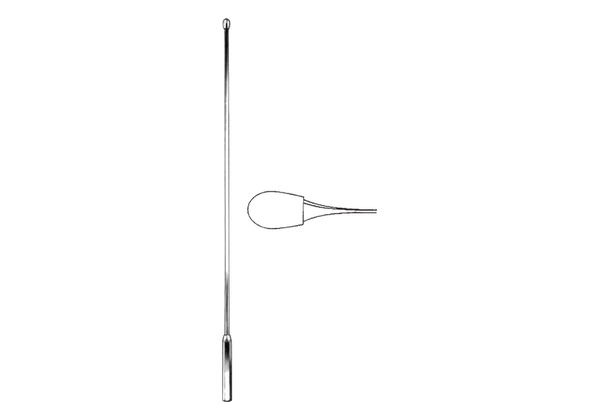
Desjardins Gall Stone Probe
The Desjardins gall stone probe lets the surgeon feel for stones in the common bile duct. When the tip touches a stone, a distinct click or grating travels up the shaft.
Three figures
We offer figures 1, 2 and 3, which differ in thickness and curve. As a result, you can match the probe to the duct. Furthermore, many surgeons keep all three.
How the Desjardins gall stone probe helps
Stones are not always visible through the opening. A probe finds them by touch. Consequently, fewer stones are left behind.
Typical procedures
Surgeons use it during common bile duct exploration. For example, it checks the duct before and after stone removal. It also confirms the duct drains freely.
Technique
Pass the probe gently along the duct. Then feel for grating or a sudden stop. Also, never force it past resistance.
Family set
The Desjardins scoop and forceps complete the set. Together they find, grasp and lift stones. A matched family speeds up the case.
Desjardins gall stone probe options
- Figures 1, 2 and 3
- Long, slim shaft
- Rounded tip
Care
Clean the full length of the probe. Rinse and dry it. Then store it flat.
The support behind the probe
Our Atlanta crew studies each probe by eye before sealing the box. The Desjardins probe has three years against manufacturing defects in each of its three figures. One extra probe on standby saves a cancelled case. For details on medical stainless steel, review ASTM F899. For a companion tool, browse our Desjardins forceps. Matching pieces appear in the general instruments catalog. We gladly confirm details for larger orders. Our common questions page covers payment and delivery.
Sold for professional use. Read our delivery page for courier choices. Product images may differ slightly. Note that nickel is part of the alloy; read our sterilization page for more.



Reviews
There are no reviews yet.