




Description
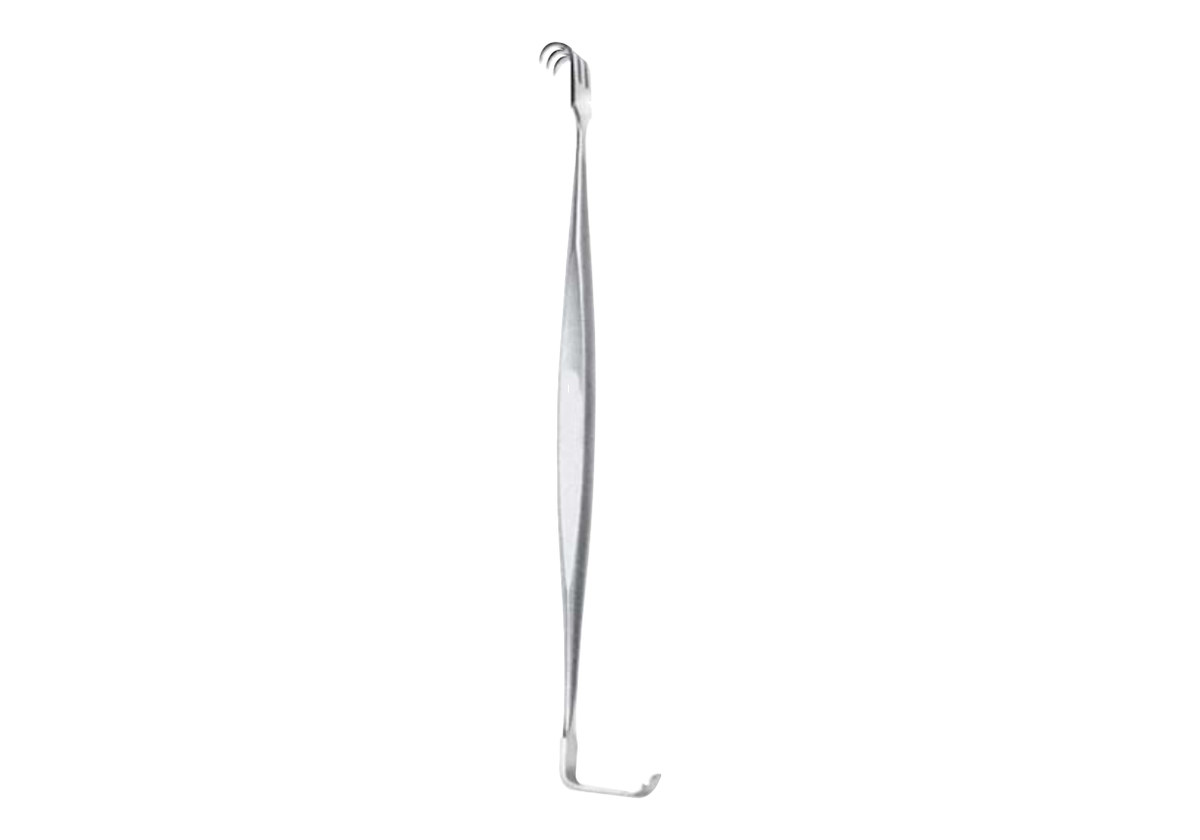
Combination Rake and Flat Retractor, Rigid Handle
This rake and flat retractor puts two retraction styles on a single rigid handle. The rake end has small teeth that catch a flap and keep it from slipping. The flat end, by contrast, presses tissue back with a smooth face.
When the Rake End Helps
Teeth grip. So, the rake suits a reflected mucoperiosteal flap that keeps sliding off a smooth blade. It hooks gently into the tissue edge and holds it open for bone work or implant placement. Light pressure is enough, since the teeth do the holding.
When to Turn to the Flat End
Some tissue should not be hooked at all. For example, a thin flap or the inside of the lip is better pushed back with a smooth surface. The flat end spreads pressure over a wider area, so it also works well for holding the cheek or protecting soft tissue near a bur.
What a Rigid Handle Changes
A rigid handle does not flex under load. As a result, the force you apply reaches the tissue directly, and the retractor stays where you set it. That predictability helps during longer procedures. However, it also means you should apply only the pressure the case needs. Our range includes a spring-neck rake if you prefer some give.
Checks and Coverage
Before it leaves our Atlanta shelves, a staff member in the United States inspects the rake teeth and the flat blade on every unit. Since it travels unsterilized, put the rake teeth through ultrasonic cleaning and a steam cycle before use. Moreover, both ends are backed by a combination retractor guarantee of three years against manufacturing defects.
The steel complies with ASTM F899. Browse the full surgical retractors range, or compare the spring-neck rake retractor with its flexible neck. Any other questions? Try our FAQs.
Sold for professional use by trained clinical staff. Our notes on cleaning retractors and shipping apply to this item.

Reviews
There are no reviews yet.