




Description
Carpenter Dissector
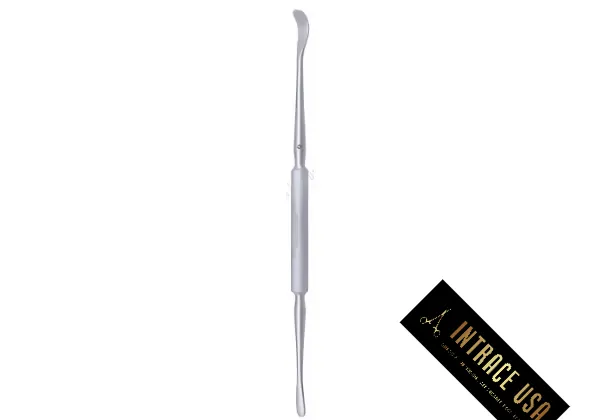
The Carpenter dissector is a long, curved instrument for blunt dissection in the throat. ENT surgeons use it to separate tissue planes, for example around the tonsil, with little cutting.
A curved working end
The working end curves away from the shaft. Therefore the surgeon can follow a rounded surface instead of pushing straight in. That shape also keeps the hand clear of the mouth opening.
Three lengths
We list the dissector at 23 cm, 24 cm and 25 cm. All three share the same curved shape. So the choice comes down to reach and how the tool balances in your hand.
Its role in tonsil work
During a tonsillectomy, a gag holds the mouth open and seizing forceps draw the tonsil inward. Meanwhile, the dissector pushes along the capsule to free it. A snare or knife may then finish the step.
Which length to pick
Shorter lengths give more control near the front of the mouth. In contrast, a longer shaft helps in larger patients or deeper fields. If you already own one length, a second size lets you cover both situations.
Caring for your Carpenter dissector
Rinse off blood and tissue as soon as the procedure ends. Next, brush the curved end with a soft nylon brush and check for residue. Then dry it well before it goes into the sterilizer.
Carpenter dissector specifications
- Lengths: 23 cm, 24 cm or 25 cm
- Shape: curved
- Stainless steel
How we handle your order
A three-year warranty protects your dissector from defects in workmanship. Our Atlanta bench gives every dissector a hand check before dispatch. Browse our help and FAQs section for common questions. Also, ASTM F899 is the benchmark standard for stainless surgical instrument steels. Pair it with our St. Clair Thompson adenoid curette when the case includes adenoids. The whole ENT category lists related tools.
Only for trained professional use. Details on product photos and nickel in stainless steel appear in our sterilization guide; shipping options appear on our shipping and delivery page.
Reviews
There are no reviews yet.