





Description
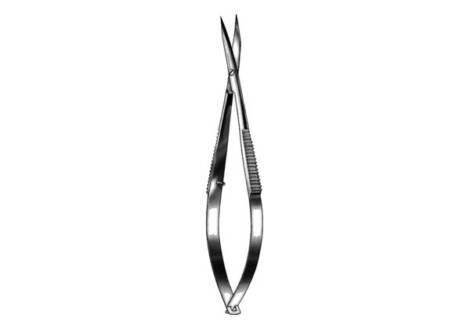
Bechert Tying Forceps
Our Bechert tying forceps gives you a slim, angled grip on very fine suture. It comes in one form: angled tips at a 10.0mm size. So you can order it as a matched pair without sorting through options.
What sets the Bechert apart
The shaft is light and thin, and the tips turn at an angle. In practice, this lets you work close to the eye while your fingers stay clear of the view. The tip faces are flat, so they hold thread rather than bite it.
Tasks it tends to handle
Surgeons usually use a tying forceps to throw and set knots in nylon or silk. For example, it may close a corneal wound or a cataract incision. It can also help lift and place a loose suture end. Still, it is not a tissue forceps, so do not use it to grasp the cornea itself.
Reasons to keep two on the tray
Knot tying works best with a matched pair. One forceps holds the short end while the other wraps the long end. Then you swap roles for the next throw. Because both tips share the 10.0mm form, the two halves of the knot feel the same.
- Order two for a full tying set.
- Add a spare if your lists run back to back.
- Pair it with a fine needle holder for the passes.
Simple steps for long life
Wipe the tips with a soft, damp sponge during the case. After surgery, flush the box joint and dry it well. Check the tips under magnification before each pack. If they no longer meet, set the pair aside for review.
Buying, warranty and links
Bechert pairs leave the box non-sterile, and they go back into service after every wash and autoclave cycle. Should a Bechert defect turn up, our pledge runs three years against manufacturing defects, counted from delivery. We source its steel to ASTM F899. Want a wider grip? Compare the Gaskin tying pattern. Also see our ophthalmic instrument range and the FAQ page.
Bechert tying forceps suit trained clinical staff only. Our care steps and shipping details explain what to expect.

Reviews
There are no reviews yet.