




Description
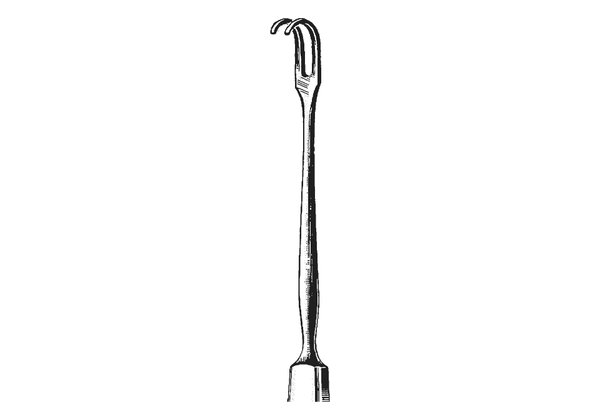
Axenfeld Hook
The axenfeld hook lets you draw back a tissue edge with two or three small prongs. You can choose 2 prongs or 3 prongs. You can also choose a blunt or sharp edge. Together, those options let you match the hook to the tissue and the step.
2 prongs or 3?
Two prongs give a narrow hold for small openings. Three prongs spread the pull wider, so the edge opens flatter. So pick 2 prongs for tight spaces and 3 prongs for broader edges. Many sets carry one of each.
Blunt versus sharp Axenfeld
A sharp edge grips skin firmly and resists slipping. However, it can catch nearby tissue or vessels. By contrast, a blunt edge is gentler and safer near delicate structures, but it may slide on firm skin. In short, choose sharp for grip and blunt for safety. If you only stock one, the blunt 3-prong version is the most forgiving for general retraction, while the sharp 2-prong suits a firm skin edge.
Picking your Axenfeld
- 2 prongs, blunt: gentle hold in small spaces
- 2 prongs, sharp: firm grip on a narrow edge
- 3 prongs, blunt: wider, kinder retraction
- 3 prongs, sharp: wide, secure skin hold
Cleaning a pronged Axenfeld
Tissue gathers between prongs. So brush each gap under running water soon after use. Then dry the hook and check the prong tips. The Axenfeld ships non-sterile; sterilize it before the first case, and it stays reusable after each cycle.
Axenfeld guarantee and links
Each Axenfeld variant has three years against manufacturing defects, Axenfeld prongs and edges both covered. The steel meets ASTM F899. Our eye surgery hook range has more, such as the Guthrie two-prong hook. Visit our FAQ page for order details.
For professional use only. See our care steps for pronged hooks and Axenfeld shipping details.

Reviews
There are no reviews yet.