




Description
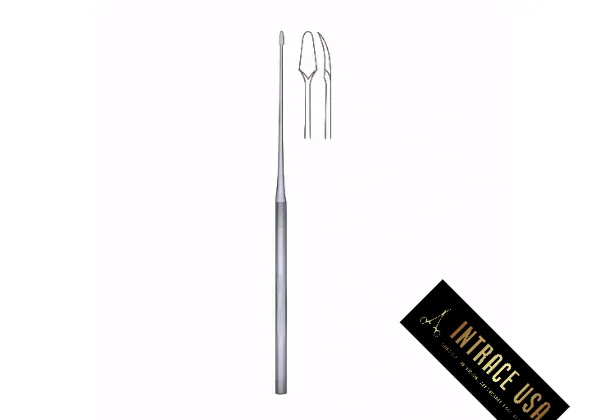
Wullstein Elevator
The Wullstein elevator lifts delicate tissue in the ear. Otologists rely on it during tympanoplasty to raise the canal skin and tympanic membrane.
Named for a tympanoplasty pioneer
Wullstein helped develop modern tympanoplasty, and several ear instruments carry his name. This elevator is one of them. So it often appears in tympanoplasty sets.
Two blade sizes
We offer a 3.2 mm and a 2.2 mm blade. The 3.2 mm Wullstein lifts a broader area of skin. Meanwhile, the 2.2 mm blade suits tighter spaces near the annulus.
Its use during tympanoplasty
The surgeon incises the canal skin and then slides the Wullstein under it. Next, gentle strokes lift the flap toward the drum. The middle ear then opens up for repair.
One blade or both
Because ear canals vary, having both Wullstein blades helps. However, a surgeon who prefers one size may buy only that. We can send photos to help you compare. Also tell us which ear speculum sizes you use, since the blade must pass through it.
Caring for the Wullstein
Handle the fine blade with care during cleaning. Rinse it after surgery, then wipe it gently with a soft cloth. Dry and sterilize it in a holder that protects the tip.
Wullstein elevator specifications
- Wullstein blade size: 3.2 mm or 2.2 mm
- Microsurgical ear elevator
- Stainless steel
Wullstein ordering
Our three-year warranty applies to each Wullstein blade size and covers Wullstein workmanship defects. Before shipment, a person in Atlanta examines each Wullstein by hand. Visit the Wullstein microsurgery FAQs for order help. Wullstein steel follows ASTM F899, a surgical steel standard. For a straight 15 cm micro elevator, compare the Shambaugh-Derlacki elevator. Our otology and ENT products list more.
Wullstein instruments suit professional users only. Wullstein photos, and why stainless steel carries nickel, have a section in our Wullstein care and sterilization info page. An unused Wullstein may return under our Wullstein returns page.


Reviews
There are no reviews yet.