




Description
Triple Chain Hook
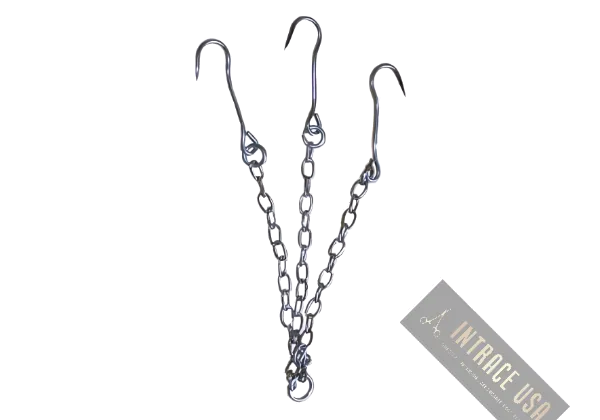
The triple chain hook holds tissue open without an assistant. Three hooks hang from short chains, so each can grip at a different angle.
How it works
Each hook catches a tissue edge. The chains then let them pull in slightly different directions. As a result, the field opens evenly.
Who uses a triple chain hook
Pathologists and anatomy teachers use it most. It frees both hands during long dissections. Students also find it helpful.
Anchoring
Fix the common ring to the table frame or a weight. Then place each hook. Adjust tension by moving the anchor point.
Why chains
Chains flex where rigid bars cannot. So the hooks follow the tissue as it moves. Meanwhile, the pull stays gentle.
Pairing
Many users pair it with dissecting hooks for fine work. We stock several patterns, from single to double hooks. Together they keep a large field open through a long session.
Setting the tension
Too much pull can tear soft tissue. For that reason, start with light tension on every chain. Afterwards, tighten each hook a little at a time until the view is clear.
Triple chain hook details
- Three hooks
- Short flexible chains
- Common anchor ring
Care
Clean hooks and chains after use, then rinse. Dry thoroughly so links do not rust. Store the hook coiled loosely.
When you order
We cover this hook for three years against manufacturing defects free of charge. Before we pack it, an inspector in Atlanta handles each hook closely. A second hook on the shelf keeps lists moving. Our FAQ page explains typical order queries. To learn about stainless alloys for surgery, see ASTM F899. For a matching piece, browse the dissecting hooks. We also help with sizing by email. Visit the full general surgical range for similar items.
Clinical use by professionals. Dispatch details are on our shipping terms. Shown images may differ slightly, and the metal contains nickel; use our cleaning guide to learn more.


Reviews
There are no reviews yet.