




Description
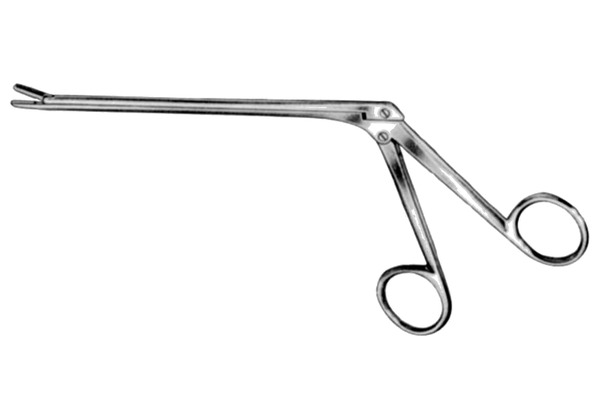
Schlesinger Laminectomy Rongeur Shaft
The Schlesinger laminectomy rongeur removes bone and disc tissue during spine surgery. Its shaft design lets the surgeon reach into the spinal canal with small, precise bites.
How surgeons use it
During a laminectomy, the surgeon bites away bone and ligament bit by bit. So each bite stays small and controlled. Then the surgeon clears the fragment and repeats.
Shaft and bite sizes
We list the Schlesinger with a 15 cm shaft. Bites come in three sizes: 2 x 10, 3 x 10 and 4 x 10 mm. The first figure gives the bite width, and the second its length.
Choosing a bite
A 2 mm bite suits careful work near nerve roots. In contrast, a 4 mm bite removes more tissue in each pass. Many surgeons therefore stock two sizes.
Where it fits
Surgeons use it alongside Kerrison rongeurs and curettes in decompression surgery. For example, it can clear disc material after the annulus opens. Meanwhile, a root retractor protects the nerve.
Caring for your Schlesinger laminectomy rongeur
Soon after the case, open the jaws and rinse out debris. Next, clean the shaft and joint with a brush under running water. Dry thoroughly, oil the moving parts and sterilize it.
Schlesinger laminectomy rongeur specifications
- 15 cm shaft
- Bites: 2 x 10, 3 x 10 or 4 x 10 mm
- Stainless steel
Ordering this rongeur
All bite sizes share our three-year warranty that covers any defect in workmanship. Because we check by hand, each rongeur gets a close look in Atlanta before it ships. Our frequently asked questions cover orders and invoices. The steel standard for surgical tools is ASTM F899. For angled bites at three lengths, see the Cushing laminectomy rongeur. Then browse our neurosurgery range for more.
Only for professionals. Our care and cleaning notes explain small image differences and nickel in steel alloys. For timing, see the shipping page.
Reviews
There are no reviews yet.