




Description
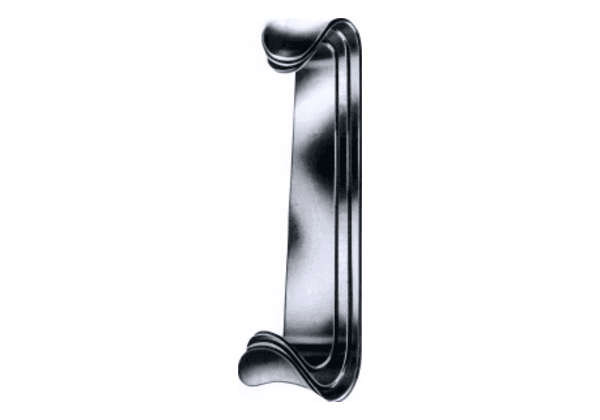
Roux Retractor
Surgeons use the Roux retractor, a double-ended hand tool, in superficial and moderate-depth wounds. It comes in three figures, each with two different blades.
Figure 1
Fig. 1 measures 15 cm with blades of 24 x 20 mm and 30 x 28 mm. So it handles the shallowest wounds in the range. It also suits small hernia and soft tissue cases.
Figure 2
Fig. 2 runs 16 cm with blades of 29 x 26 mm and 36 x 36 mm. Therefore it covers the middle ground for most general surgery. Many trays carry this size as the default.
Figure 3
Fig. 3 reaches 17 cm with blades of 33 x 29 mm and 38 x 43 mm. Because the blades run longer, it holds deeper layers back. Then it works well for larger incisions.
Picking a figure
Match the blade depth to the wound rather than the patient size alone. Also, a pair of the same figure lets two assistants pull evenly. For shallow pediatric work, the Baby-Roux or Mini-Roux retractor sizes may fit better.
Cleaning Roux retractor
Rinse each blade soon after use, since both ends touch tissue. Next, scrub the inside curve of each blade, where debris often collects. Then dry the instrument and sort it by figure for storage.
Roux retractor specifications
- Fig. 1: 15 cm, 24 x 20 / 30 x 28 mm
- Fig. 2: 16 cm, 29 x 26 / 36 x 36 mm
- Fig. 3: 17 cm, 33 x 29 / 38 x 43 mm
- Double-ended
Buying from Intrace USA
Your instrument comes with a three-year warranty against manufacturing faults. Then our Atlanta office checks every order before dispatch. You can find care tips in our FAQs. Meanwhile, ASTM F899 describes the steel grades used for surgical instruments. For a small 13 cm version, see our Baby-Roux retractor. Our full range sits in the surgical retractor category.
Sold for professional use. Please read our care and sterilization guide and returns and refunds pages.

Reviews
There are no reviews yet.