




Description
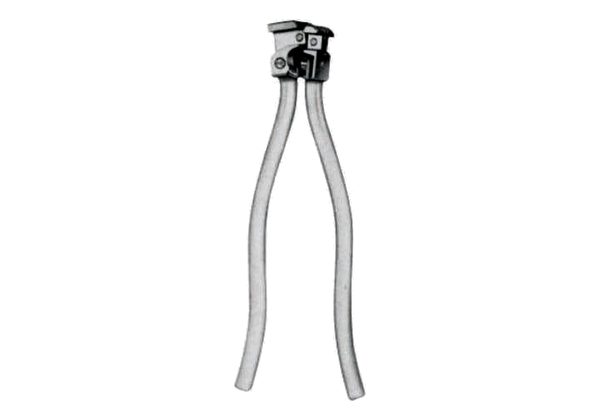
Plate Bending Plier
Plate bending pliers shape bone plates so they fit the contour of the bone. A well-contoured plate sits flat and holds the fracture better.
Why contour plates
Bones are curved, while plates often come straight. Therefore surgeons bend plates to match. As a result, screws pull the plate evenly against the bone.
Four versions
There is a version for 1.5 / 2.0 mm plates, suited to hand and facial plates. In addition, the pliers come at 14 cm and 16 cm. The 25.5 cm version gives leverage for larger plates.
Who uses plate bending pliers
Trauma surgeons contour plates for the forearm, clavicle and ankle. Also, hand and facial surgeons use the small version. Pelvic surgeons use larger pliers for reconstruction plates.
Bending gradually
Make small bends and check fit often. Then avoid bending back and forth at one spot. Repeated bending weakens the plate.
Protecting plate holes
Bend between holes, not across them. Consequently, the holes keep their shape. In addition, that ensures screws seat properly.
Plate bending pliers versions
- For 1.5 / 2.0 mm plates
- 14 cm and 16 cm
- 25.5 cm
- Supplied non-sterile
Care
Plate bending leaves fine metal marks on the jaws, so scrub them well. Oil the hinge once dry. Replace pliers whose jaws have worn smooth.
Delivery basics
An inspector in Atlanta inspects the pliers in detail before sealing the box. The cover protecting every pliers covers three years against manufacturing defects. Open our main orthopedic lineup for other sizes. We readily check sizes for repeat orders. To learn about instrument metals, check ASTM F899. For a close alternative, explore our small plate bending iron. For quick answers, check our FAQ list. Most hospitals order a backup pliers to avoid delays.
Licensed buyers only. Shown images may differ slightly. Also, nickel is part of the alloy; open our reprocessing guide. Open the shipping policy for courier choices.

Reviews
There are no reviews yet.