




Description
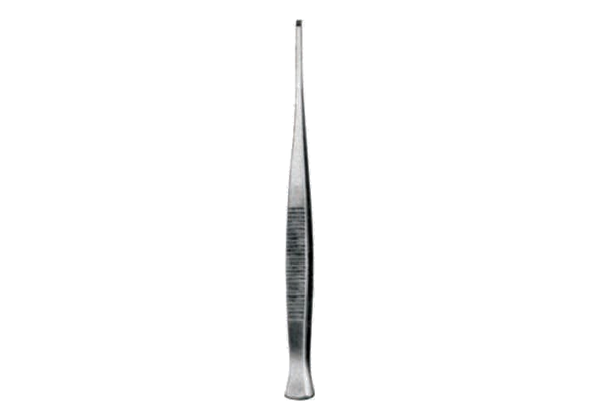
Partsch Chisel
The Partsch chisel is a fine, flat blade from the oral surgery tradition. It trims thin bone with a single bevel, which keeps the cut shallow and neat.
A pattern with a history
These fine blades honor Carl Partsch, a pioneer of oral surgery. Their narrow edges suit thin bone around teeth and in the face. In addition, they work well on small bones elsewhere.
Two lengths, five widths
Both the 13.5 cm and 17 cm lengths come in 2, 3, 4, 5 and 6 mm. Additionally, the shorter one gives close control. Meanwhile, the longer one reaches further back in the mouth or a deep wound.
Who uses a Partsch chisel
Oral, maxillofacial and hand surgeons are the main users. For example, it helps remove a thin ledge of bone or prepare a graft bed. Also, a light mallet drives it with ease.
Short or long, and why
The 13.5 cm length suits work near the front of the jaw or on the hand. Meanwhile, the 17 cm length adds reach for molar regions and deeper wounds. Many oral surgery trays therefore carry both lengths in two or three widths.
Partsch chisel options
- Lengths: 13.5 cm and 17 cm
- Widths: 2, 3, 4, 5 and 6 mm in each length
- Single-bevel fine blade
- Supplied non-sterile
Fine edge care
Small edges dull quickly if they touch other steel. So clean and dry them one by one. Then store them in a rack, and check each tip before the next case.
Buying support
Prior to shipping, a person in Atlanta goes over the Partsch pattern under good light. If every chisel develops a factory defect, you can claim three years against manufacturing defects. One extra chisel on the shelf covers reprocessing gaps. Compare it with the Partsch gouge. Similar designs are in the orthopedic line. Our questions page walks through payment questions. For facts on surgical stainless steel, see ASTM F899. We can check stock for new trays.
Sold to licensed professionals. The care page explains why photos vary and the alloy’s nickel. Refund rules are on our refund policy.

Reviews
There are no reviews yet.