




Description
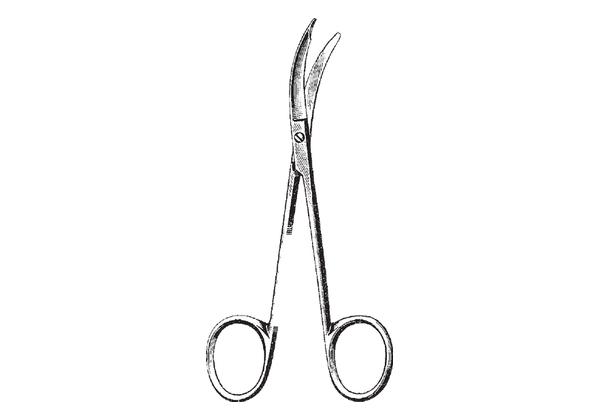
Northbent Ligature Scissors
The Northbent stitch scissors have blades angled upward from the handles. That angle lets the blades lie flat on the skin while the fingers stay above the wound.
Upward angle
The bend lifts the handles away from the patient. Therefore, the user sees the stitch clearly and cuts close to the knot.
Length of the Northbent stitch scissors
At 13 cm, they give a little more reach than compact patterns. Meanwhile, the blades remain short for control.
Typical uses
Nurses and clinicians remove sutures with them on wards and in clinics. They also cut suture tails in theatre.
Technique
Tease the knot upward first. After that, slip the angled lower blade beneath the thread and close.
Northbent or Shortbent
The Shortbent is shorter and more compact. In contrast, the Northbent adds reach.
Pairing
Fine forceps help lift and remove each stitch. Together, the two tools make removal quick.
Northbent stitch scissors for scalp and limb wounds
Scalp and limb stitches often sit in hair or on curved surfaces. In those places, the upward angle keeps the fingers out of the way, so the lower blade can follow the skin closely.
Northbent stitch scissors details
- 13 cm overall
- Upward-angled blades
- Fine tips
Northbent care
Clean the angled blades. Dry and sterilise.
How we protect your scissors
Northbent scissors carry three years against manufacturing defects. Before shipment, a colleague in Atlanta studies the Northbent pattern piece by piece. For facts on instrument metals, consult ASTM F899. It pairs well with our Shortbent pattern. For answers on returns, consult our customer FAQ. A second scissors in the sterile store keeps lists moving. Companion patterns sit in our general surgery range. Need a custom quantity? Message us today.
For use by trained teams. Returns follow our refund terms. Our sterilization page discusses differences in pictures plus the alloy’s nickel.


Reviews
There are no reviews yet.