




Description
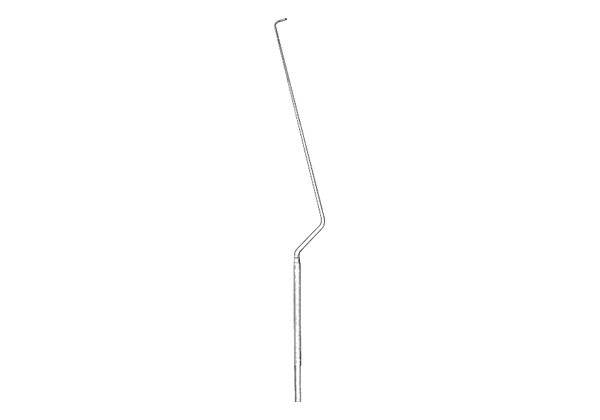
Hardy Enucleator
The Hardy enucleator is a long, slender instrument for transsphenoidal pituitary surgery. Surgeons use it to free and lift adenoma tissue away from the gland and the walls of the sella.
Built for the transsphenoidal corridor
Pituitary surgery happens at the end of a narrow nasal and sphenoid pathway. Therefore the enucleator has a long reach of 25 cm, so the hand stays well clear of the nostril. Meanwhile, the small working end sits deep inside the sella under the microscope or endoscope.
Left, right, blunt or sharp
We offer four versions. First, pick a left or a right orientation to suit the side of the sella you need to reach. Then choose a blunt end for gentle separation or a sharp end for firmer tissue. In short, the four options cover both sides and both tissue types.
Its place in a pituitary set
Many teams keep a left and a right Hardy enucleator side by side on the tray. For example, a surgeon may sweep one wall with the right version and then switch hands for the opposite wall. Curettes and suction tubes usually work alongside it.
Choosing a pair
Most buyers start with a matching left and right pair in one tip style. However, a surgeon who handles fibrous tumors often adds the sharp versions as well. If you are unsure which combination fits your practice, write to us and we can talk it through.
Caring for your Hardy enucleator
Wipe the tip clear of blood and tissue while the case is still running. Afterward, soak and brush the whole shaft, paying close attention to the bend near the tip. Finally, dry it completely, then sterilize it and store it where the fine end cannot knock against other steel.
Hardy enucleator specifications
- Overall length: 25 cm
- Orientation choice: left or right
- End choice: blunt or sharp (four combinations)
- Stainless steel
How we handle your order
Every enucleator we sell comes with a three-year warranty that covers faults in workmanship. Before packing, one of our Atlanta staff turns each piece over in hand and looks for flaws. You can read answers on returns and sterilization on our frequently asked questions page. Steel choice follows ASTM F899, which describes alloys fit for surgical instruments. For scraping the sella afterward, look at the Hardy malleable curette. Also, browse the rest of our neurosurgical instruments.
Sold for professional use only. Our sterilization and care notes explain that photos may show a sibling pattern and that stainless steel naturally includes nickel. Check the delivery information for dispatch times.


Reviews
There are no reviews yet.