




Description
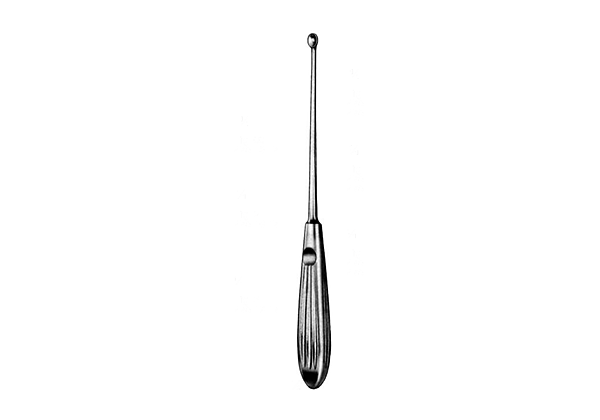
Halle Bone Curette Flexible
The Halle flexible bone curette has a shank that bends to follow a curved path. So the cup can reach recesses that a rigid curette cannot.
Why flexible
Some cavities curve away from the line of sight. A stiff curette can only reach what it points at. By contrast, a flexible shank lets the cup slide around a bend and still scrape the wall.
Three figures
Order figure 1, 2 or 3. The figures step up in cup size, so you can choose a fine cup or a broader one. Many surgeons keep all three.
Where the Halle flexible bone curette helps
It suits sinus and nasal work, where cavities twist. Also, it helps in long bone canals and cysts with odd shapes. Gentle bending lets it follow the cavity wall.
Shaping the shank
Bend the shank slowly by hand before use, not inside the patient. Then check that the cup sits at the angle you want. Avoid sharp kinks, since they weaken the metal.
Flexible versus rigid
A rigid curette transmits more force, so it suits dense bone. However, the flexible Halle follows bends that a rigid tool cannot. Therefore many teams keep both types available.
Halle flexible curette figures
- Figure 1, 2 or 3
- Flexible, hand-bendable shank
- Sharp cup for scraping
- Ships non-sterile
Care of a flexible shank
Straighten the shank gently after use if needed. Then clean, rinse and dry it fully. Retire any curette with a crack or kink.
Guarantee and help
Each curette gets a hand review by Atlanta staff prior to packing. Your written warranty on this curette covers three years against manufacturing defects as standard. Similar items feature in the orthopedics category. One extra curette in stores covers reprocessing gaps. FDA records list ASTM F899 under surgical instrument steel. For shipping questions, see the FAQ page. Want advice on options? Ask us today. Think about adding our Volkmann curette.
Supplied for clinical use. Exchanges show on our refunds page. Our care and cleaning page sets out image variation and the alloy’s nickel.

Reviews
There are no reviews yet.