




Description
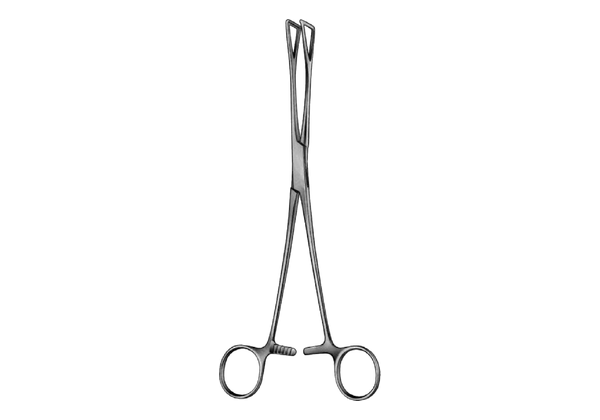
Duval Tissue and Organ Holding Forceps
The Duval forceps hold soft, spongy tissue such as lung and bowel. Their triangular, fenestrated jaws spread grip across a wide area with little crushing.
Triangular jaws
The jaws open into a triangle with a window in the middle. As a result, tissue bulges gently into the gap and stays held. Moreover, that design suits soft organs.
Lengths and materials
We offer 18, 20 and 23 cm. In addition, each length comes in plain stainless steel or with tungsten carbide jaw inserts. The carbide version keeps its grip surface longer.
Typical uses of the Duval forceps
Thoracic surgeons hold lung lobes with them. In addition, general surgeons grasp bowel and mesentery. They also help in pelvic surgery.
Technique
Close the jaws around the tissue with light pressure. Then lock only as far as needed. Also, release from time to time during long cases.
Steel or tungsten carbide
Stainless steel suits most departments. However, busy thoracic units often choose carbide for longer life. Either way, the jaw shape stays the same.
Choosing a length
Short lengths suit open bowel work near the surface. By contrast, 23 cm reaches deep into the chest. Also, many thoracic trays carry two lengths.
Duval forceps options
- Lengths: 18 cm, 20 cm, 23 cm
- Plain steel or TC jaw inserts
- Triangular fenestrated jaws
Care for the windows
Brush through the jaw windows and around the triangle edges. Rinse and dry. Afterwards, sterilise.
When you order
Our team in Atlanta goes over the forceps with care before shipment. Steel or tungsten carbide, every Duval pair carries three years against manufacturing defects. Our FAQ page addresses shipping and refunds. Think about adding the Babcock forceps. Matching instruments sit in our general surgery line. For background on surgical alloys, open ASTM F899.
For professional use only. Our photos are illustrative. Also, the steel holds nickel; see our care and cleaning page for details. Refunds go by the returns policy.



Reviews
There are no reviews yet.