





Description
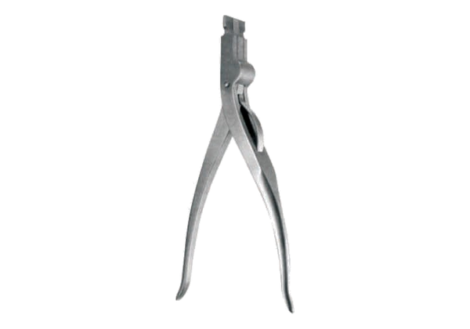
Arthroscopy Instrument Fig 1
This arthroscopy instrument fig 1 is a hand instrument for keyhole joint surgery. It comes in three sizes and five tip angles, fifteen versions in all.
What the figure number means
In this range, the number names the jaw pattern. Figures 1 to 4 each have their own working end. If you need a drawing of figure 1 before ordering, please ask us.
Fig 1 arthroscopy sizes and tips
The shaft comes at 2.7, 3.4 or 4.5 mm. For every shaft, you can pick a straight tip, a tip bent upward by 7 or 15 degrees, or a tip turned 30 degrees toward either side. Therefore the jaws reach tissue at the front, back and sides of the joint.
Who uses this arthroscopy instrument
Arthroscopic surgeons use it in knee, shoulder and ankle procedures. Additionally, the 2.7 mm size suits small joints. Meanwhile, 4.5 mm suits larger joints such as the knee.
Choosing an angle
Straight tips work straight ahead through the portal. By contrast, upward tips reach over a curved surface. Sideways tips get into the gutters of the joint.
Handling with care
Arthroscopic jaws are fine and can break if twisted. Consequently, avoid levering with the tip. An overload-protected version is also available.
Building a fig 1 arthroscopy kit
Most sports units start with the straight tip in the middle size. Later, they add upward and sideways tips as cases demand. Thus the kit grows only when a real need appears.
Arthroscopy instrument fig 1 options
- Shaft sizes 2.7, 3.4 and 4.5 mm
- Tip straight, or bent up 7 or 15 degrees
- Tip turned 30 degrees to the left or right
- Supplied non-sterile
Arthroscopic care
Flush the jaws and shaft with water right after use, working the jaws open and closed. Clean any flushing port, then dry with compressed air. Lubricate the action and inspect the jaws under magnification.
Buying with confidence
Any arthroscopy instrument undergoes a final look at our Atlanta base before dispatch. You get three years against manufacturing defects for the arthroscopy instrument as standard. A backup arthroscopy instrument on the shelf helps on busy days. Some trays also hold the overload-protected version. Instrument stainless steel has its own standard, ASTM F899. Similar patterns are in the orthopedic range. We gladly quote multiples for new trays. The help page deals with payment questions.
For trained clinical staff only. Visit the delivery policy for lead times. Our reprocessing guide covers how photos may vary as well as the alloy’s nickel.

Reviews
There are no reviews yet.