
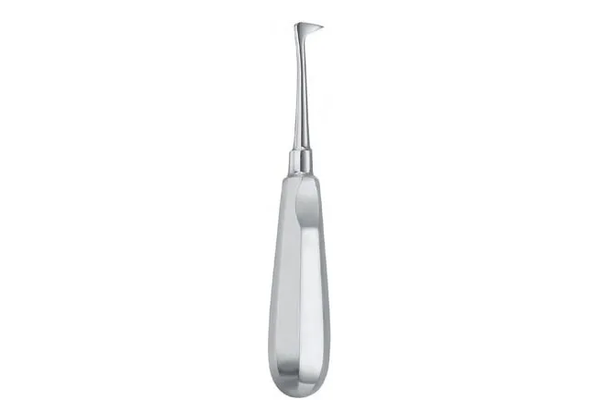
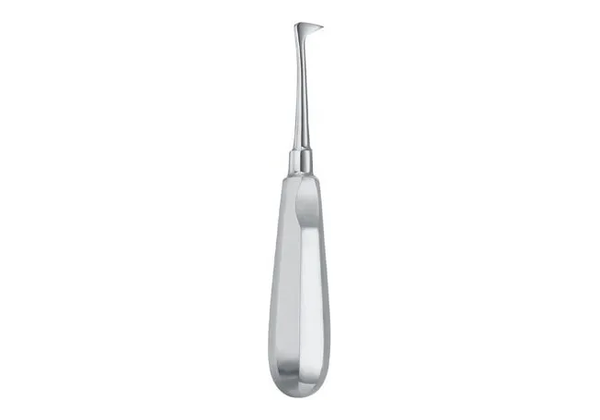




Description
Cryer root elevators
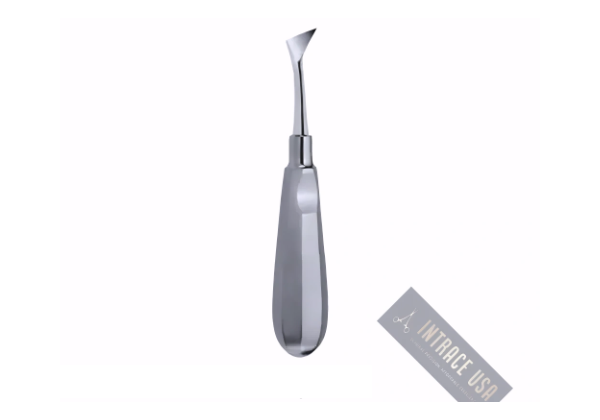
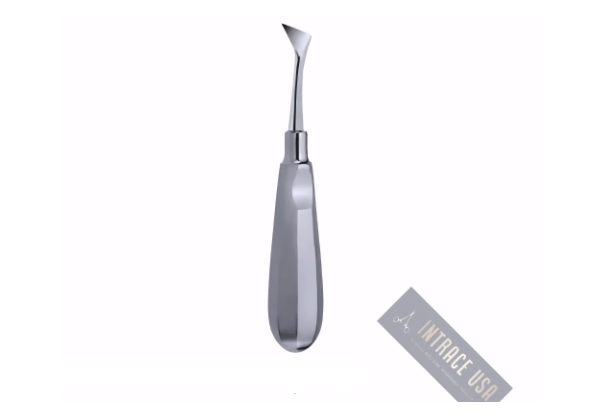
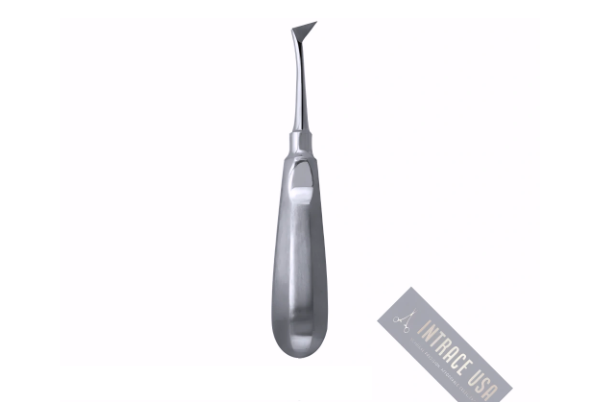
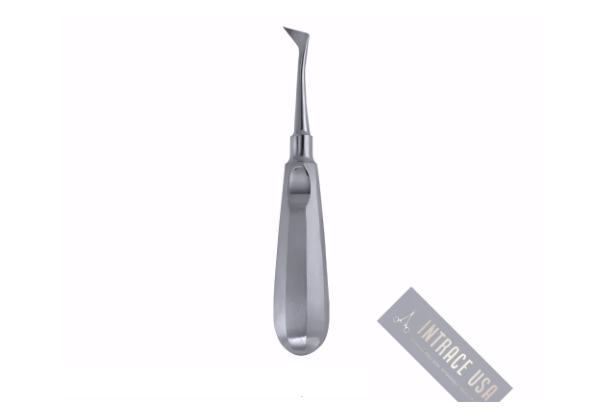
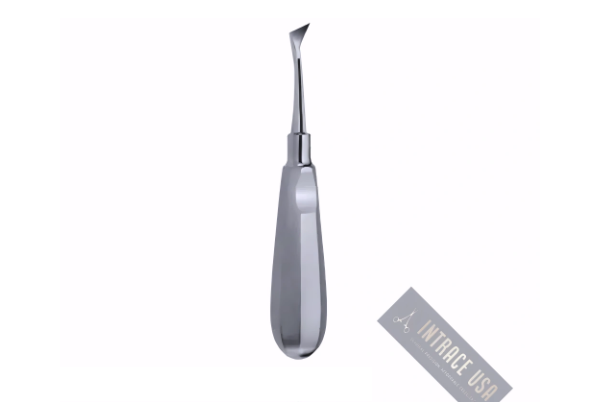
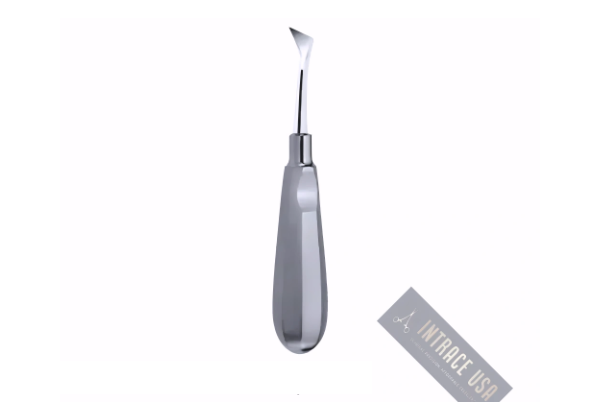
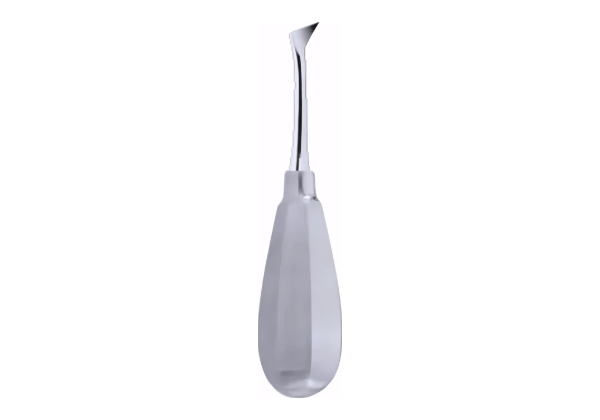
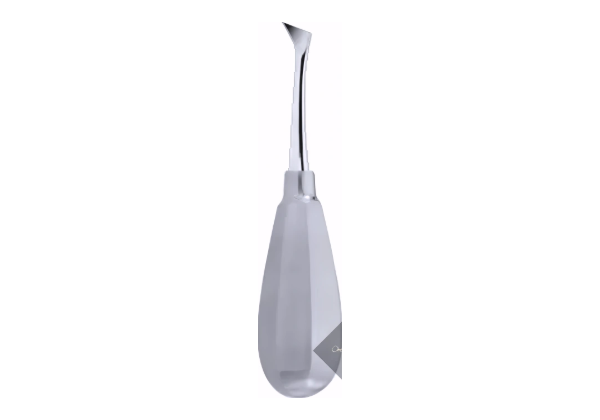
The Cryer is the instrument you reach for when a root is already broken. Its blade comes to a sharp triangular point, and that point is what lets it bite into a fragment nothing else can hold. Fourteen figures are listed here in stainless steel, at one price for twelve of them.
What the triangular blade is for
Most elevators lever along a root surface. A Cryer works differently, because the pointed blade goes into a space instead of alongside one. Section a lower molar, lift the first root, and an empty socket is left behind. The Cryer tip drops into that socket, meets the bone between the roots, and turns.
That turning movement does the work. Rotate the handle like a doorknob and the blade rolls the remaining root up and out of its socket. Surgeons call it a wheel-and-axle action, and no other elevator pattern performs it as cleanly.
Why so many are handed
Three of the figures arrive as mirrored pairs: Fig. 25 with Fig. 26, Fig. 31 with Fig. 32, and Fig. 44 with Fig. 45. One of each pair turns clockwise into the socket and the other turns counter-clockwise.
Consequently a single side only covers half the mouth. Take a mesial root on the lower left and a distal root on the lower right: they need opposite blades, even though the procedure is identical. Practices doing surgical extractions therefore stock pairs, not singles.
The fourteen figures
| Figure | Form |
|---|---|
| Fig. 25, Left | Handed pair with Fig. 26 |
| Fig. 26, Right | Handed pair with Fig. 25 |
| Fig. 31, Left | Handed pair with Fig. 32 |
| Fig. 32, Right | Handed pair with Fig. 31 |
| Fig. 44, Left | Handed pair with Fig. 45 |
| Fig. 45, Right | Handed pair with Fig. 44 |
| Fig. 7 | Single pattern |
| Fig. 8 | Single pattern |
| Fig. 3A | Single pattern |
| Fig. 12 | Single pattern |
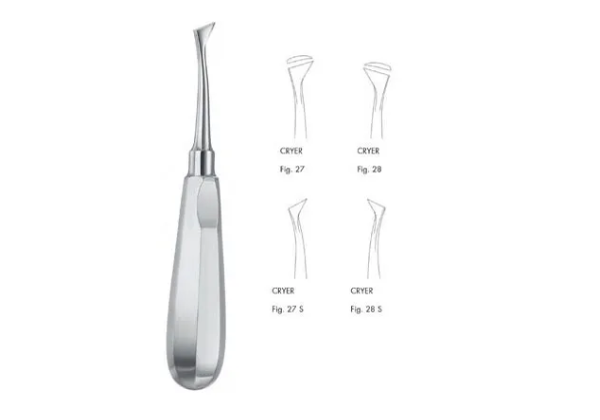
| Fig. 27 | Single pattern |
| Fig. 28 | Single pattern |
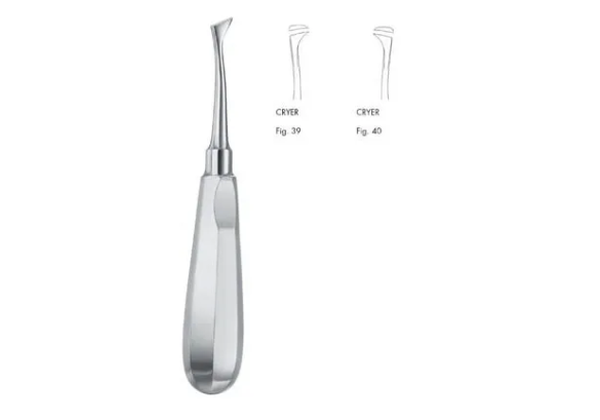
| Fig. 39 | Single pattern |
| Fig. 40 | Single pattern |
Fig. 7 and Fig. 8 sit slightly above the rest on price. Every other figure costs the same, so build the range in whatever order your case mix demands.
Getting the purchase right
Placement decides everything with this instrument. Seat the point on the bony septum between the roots, not on the root itself, and never against the buccal plate. Then turn slowly and watch the fragment rather than the handle.
Because the blade is pointed, it will find purchase in bone that a flat elevator slides over. However that same point concentrates force on a very small area, so a heavy hand fractures the septum instead of lifting the root. Small, controlled rotations beat one determined push every time.
Looking after the point
A rounded Cryer tip is a useless Cryer tip. Protect the working end during cleaning, and store these away from heavier steel that can knock the point flat. Ultrasonic and autoclave cycles suit them normally, though drying matters: moisture left sitting in the serrated handle grooves invites staining over time.
Inspect the tip under good light before each list. Any flattening you can see with the naked eye is already enough to cost you purchase on a difficult root.
Three years of cover against manufacturing defects applies to every Cryer pattern on this page.

Reviews
There are no reviews yet.