
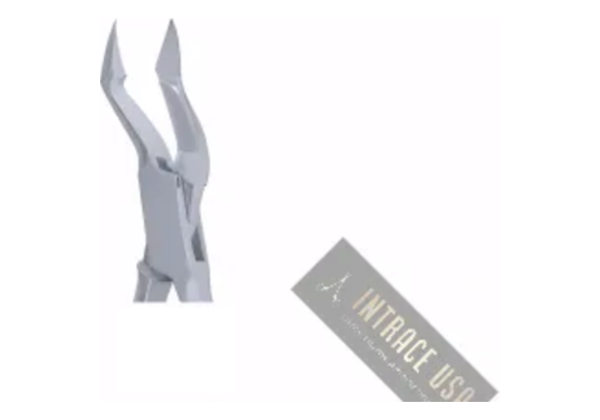




Description
Side Cutting Bone Rongeurs
What separates a side cutting bone rongeur from an ordinary one is simply where the edge sits. The cutting surface runs along the flank of the beak rather than across its tip, so the instrument bites while lying parallel to the surface it is working on. That one change in geometry decides which corners of a field you can actually reach.
Cutting at the side, not at the tip
An end-cutting beak has to be presented head-on, which means finding room to angle the whole instrument into position. Frequently there is no such room. A side cutting beak slides flat against a ridge or a wall of bone and takes its bite from there, and consequently the shaft never has to lift away from the surface. Surgeons tend to describe the difference as working with the instrument rather than around it.
Why 16.5 cm is the working length
Shorter rongeurs give up reach; longer ones cost precision, because every millimetre between hand and beak magnifies a tremor. At 16.5 cm this pattern sits in the middle, where a single-action grip still translates almost directly into what the tips do. In other words it is short enough to feel, and long enough to arrive.
The essentials
- Length 16.5 cm, roughly 6½ inches
- Side cutting beak, ground along the flank
- Sprung handles that reopen on release
- Matte finish rather than mirror, to keep reflections down
- Checked in Atlanta, Georgia before dispatch
Who keeps one to hand
Oral surgeons use it for interseptal bone and for trimming alongside a socket wall after extraction. Podiatric and hand teams reach for it wherever bone has to be taken back flush to a surface instead of nibbled from the end. Our full range of bone rongeurs covers straight, curved, round-beak and double-action patterns alongside this one.
Looking after the edge
A side ground edge dulls from the flank inwards, so it stops cutting cleanly well before it looks blunt. Test it on a folded gauze rather than judging by eye. Meanwhile keep the joint free of bone dust, lubricate after every clean, and send the instrument for regrinding at the first sign of crushing instead of cutting.
Covered for three years against manufacturing defects.

Reviews
There are no reviews yet.