




Description
Beyer Bone Rongeurs, 18 cm
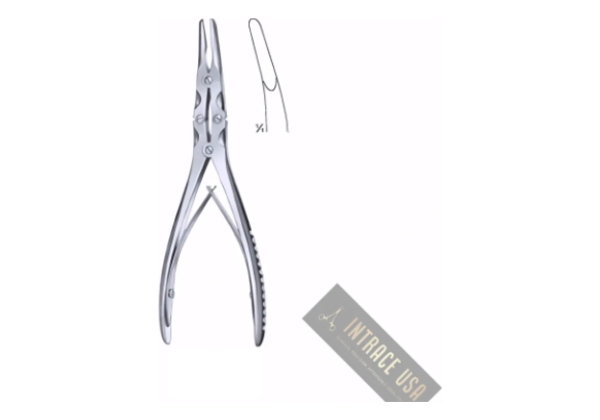
Ask an oral surgeon to picture a bone rongeur and most will describe something close to a Beyer bone rongeur 18 cm. The pattern marries gently curved jaws to compound handles, and that pairing is the reason it appears on more trays than any of the specialised beaks sitting around it.
What makes a Beyer a Beyer
Two features define the pattern. Firstly the jaws carry a soft curve rather than a sharp angle, so the tips follow the contour of bone without pushing the shaft off line. Secondly the handles act through a compound hinge, which keeps the grip needed to close them modest even in dense cortical bone. Neither feature is dramatic by itself. Taken together they produce an instrument that is seldom the perfect tool for a job and almost never the wrong one.
Build and figures
- 18 cm overall, a shade over 7 inches
- Softly curved jaws on a compound hinge
- Knurled handle faces for grip through a glove
- Return spring that reopens the handles unaided
- Checked over in Atlanta, Georgia before dispatch
Specialties that stock it
Oral and maxillofacial surgery accounts for most of them, generally for alveoloplasty and interseptal reduction after multiple extractions. Beyond dentistry the same pattern is standard in podiatric forefoot work and in hand surgery, where the soft curve is forgiving around small bones. We also list this Beyer at 18.5 cm, and that page explains which of the two to pick.
Between cases
Compound hinges hide debris where a simple pivot does not, therefore the joint deserves a brush rather than a rinse. Flush it while matter is still wet, oil it once it is dry, then cycle the handles several times before the instrument goes into the autoclave. Store it open, since a spring left compressed for months loses its willingness to return.
Warranted for three years against manufacturing defects.

Reviews
There are no reviews yet.