




Description
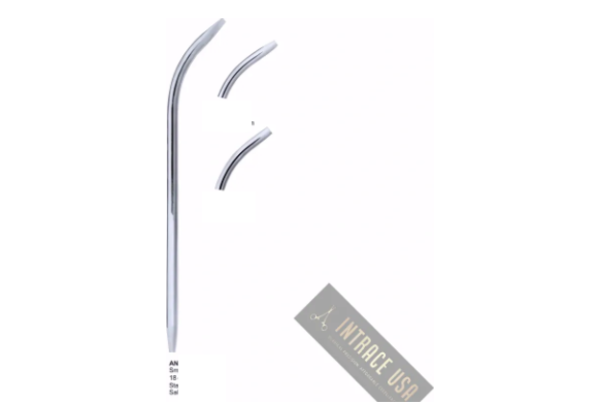
Stainless steel saliva ejectors, 18 cm
These are the reusable answer to the disposable plastic ejector. Each tube is drawn from stainless steel, curved at the working end, and tapered so it sits comfortably in the floor of the mouth. All three run 18 cm. Only the bore changes: 3 mm, 4 mm or 5 mm.
Pick the bore, not the length
The length is fixed across the range for a reason. Eighteen centimetres reaches the back of the mouth while the hub stays clear of the operator’s hands. Therefore the only real choice is how much the tube moves per second.
- Small, Ø 3 mm. Low volume and low pull. Best where a stronger draw would lift soft tissue onto the opening, and for children.
- Medium, Ø 4 mm. The everyday size. Enough flow for restorative work without dominating the floor of the mouth.
- Large, Ø 5 mm. For pooling, heavy irrigation and longer surgical appointments.
Why steel instead of plastic
A disposable ejector costs pennies, so the argument for steel is not the unit price. Instead it is three other things. Firstly, a rigid tube holds the shape you bend it to and stays where you park it, which a soft plastic tube never does. Secondly, a steel tube does not collapse under suction when it presses against the cheek. Finally, a practice that already runs a steriliser adds one item to an existing cycle and removes a recurring consumable from the monthly order.
There is a waste argument as well, and for some practices it is the deciding one. A busy surgery gets through thousands of plastic ejectors a year.
The three sizes
| Size | Bore | Length |
|---|---|---|
| Small | Ø 3 mm | 18 cm |
| Medium | Ø 4 mm | 18 cm |
| Large | Ø 5 mm | 18 cm |
Every one is stainless steel, autoclavable, and made to fit standard suction tubing.
Chairside habits that make them last
A saliva ejector spends its working life full of the things that stain steel. Consequently the routine matters more than the metal. Draw clean water through the tube at the end of each patient, before anything inside has a chance to dry. Then brush the lumen, process, and autoclave.
Check the curve now and then as well. A tube that has been bent and straightened repeatedly will eventually work-harden at the same point, and that is where it will fail. Set the curve you like once and leave it.
Intrace USA stands behind every one of these for three years against manufacturing defects.

Reviews
There are no reviews yet.